

What is Pilates? Effects, Differences from Yoga, and Types Explained!
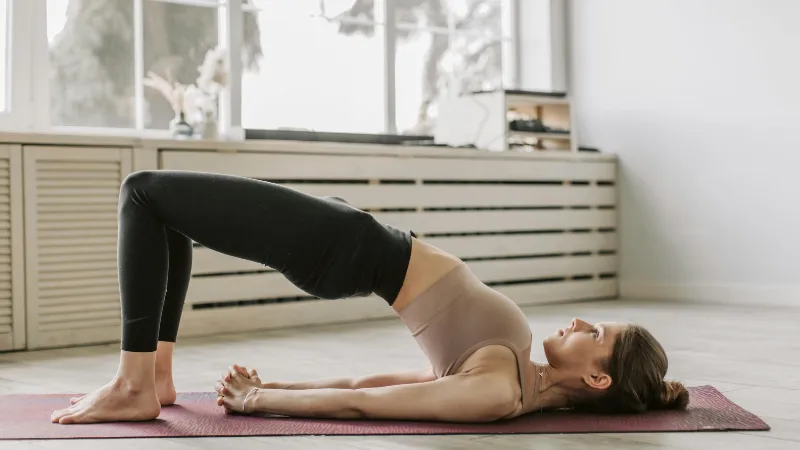
"What exactly makes Pilates different from Yoga?" "It seems like something only highly conscious people do; can I do it too?" To you who have such questions: Recently, "Pilates" has gained overwhelming support not only among models and athletes but also among health-conscious individuals. Although the name is often heard, the reality of it is surprisingly unknown. In this article, we will thoroughly explain "What is Pilates?", its amazing effects, and how beginners can get started, more clearly than anywhere else!
1. What is Pilates? Its Surprising Roots
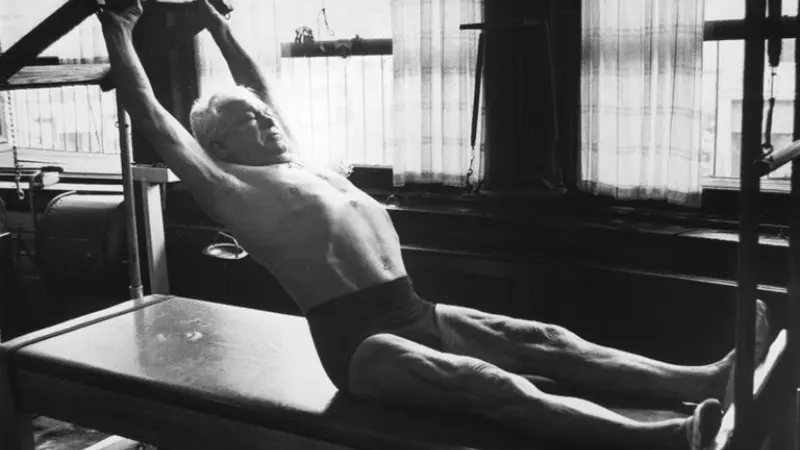
Pilates is an exercise method developed in the 1920s by a German, Joseph H. Pilates, for the purpose of "rehabilitation."
Originally, it was devised so that soldiers injured in World War I could recover their strength even while in bed. Therefore, unlike sports that involve intense movement, it specializes in "strengthening deep muscles (inner muscles) without putting too much burden on the body."
The Decisive Difference from Yoga
It is often confused with Yoga, but the purpose and approach are different.
- Yoga: Focuses on abdominal breathing. It emphasizes holding poses, mental stability, and flexibility.
- Pilates: Focuses on thoracic (chest) breathing. It emphasizes keeping the body constantly moving, "correct posture," and "strengthening the core."
In short, if Yoga is "training for mental stability," Pilates is "re-education (body maintenance) to use the body correctly."
2. Three "Lifelong" Benefits of Pilates
If you continue with Pilates, you can experience changes that affect your "quality of life" beyond just losing weight.
(1) Posture becomes dramatically beautiful
Modern problems include "slouching," "rounded shoulders," and "swayback." Pilates aligns the skeleton to its original correct position with delicate movements that seem to move the spine one by one. Just having a straight spine makes you look 5 years younger.
(2) Toward a "supple body" that doesn't tire easily
When inner muscles are strengthened, the trunk (core) stabilizes. As a result, you stop using unnecessary force in casual daily actions (walking, standing), leading to improvements in stiff shoulders and back pain, and making you less prone to fatigue.
(3) Eliminating the "pooch" belly and tightening body lines
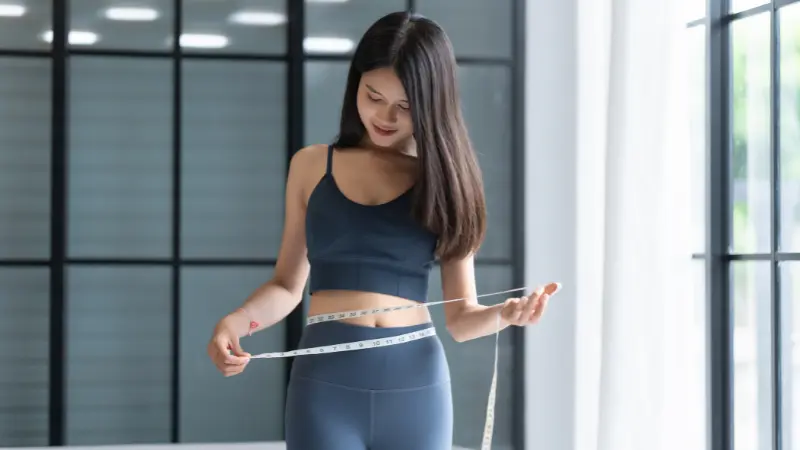
"My weight hasn't changed, but my pants have become loose" is a common Pilates experience. Because it strengthens the muscles that support internal organs, the area around the stomach becomes refreshed, and it becomes easier to create a waistline.
3. The Basics of Pilates are "Breathing" and "Concentration"
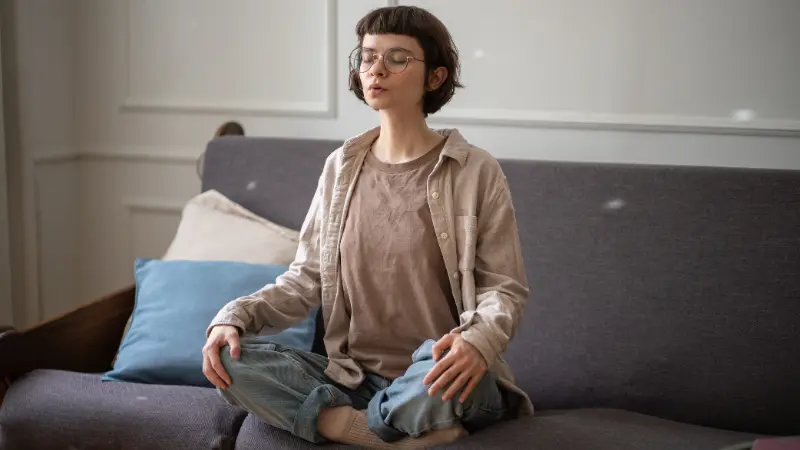
The most important thing in Pilates is "Thoracic Breathing." Inhale through the nose, expanding the ribs sideways deeply, and exhale through the mouth while thinning the stomach. Just performing this breathing regulates the autonomic nervous system and gives the brain a refreshing sensation. Also, because you concentrate all your nerves on "how your muscles are moving now," it is also called "Moving Meditation."
4. "Mat Pilates" vs "Machine Pilates": Which is better? Thorough Comparison
When you look up Pilates, the choice between **"Mat Pilates" and "Machine Pilates"** always comes up. Let's organize the differences to see which one suits you.
Mat Pilates: Slowly strengthening the "Core" with body weight
This is a style performed on a mat laid on the floor, controlling your own body weight.
- Feature: Because there is no assistance, the "ability to maintain posture with only your own muscle strength" is cultivated.
- Merit: Once you learn the movements, it is easy to reproduce at home and make it a habit. Also, it is easy to start in group lessons at gyms.
- Recommended for: People who want to improve their body control.
Machine Pilates: Understanding the "Correct Form" with device support
This style uses dedicated machines such as the "Reformer" and utilizes the load and support of springs.
- Feature: Since the machine guides the trajectory of movement, even people with little muscle strength can easily reproduce the correct form.
- Merit: By changing the strength of the spring, you can adjust the load from "very light for rehabilitation" to "very heavy for muscle training."
- Recommended for: Beginners who are not good at exercise, or those who want to target specific parts.
Summary
Has the question "What is Pilates?" been resolved? Pilates is not just exercise, but a lifelong skill to use and organize your body correctly.
- Adjust posture and keep your visual age young
- Strengthen inner muscles to create a body that is hard to gain weight and hard to get tired
- Relieve stress with deep breathing and refresh your mind
Even with just one lesson, you should be surprised by the refreshing feeling as if your spine is stretched and your vision becomes bright after finishing.
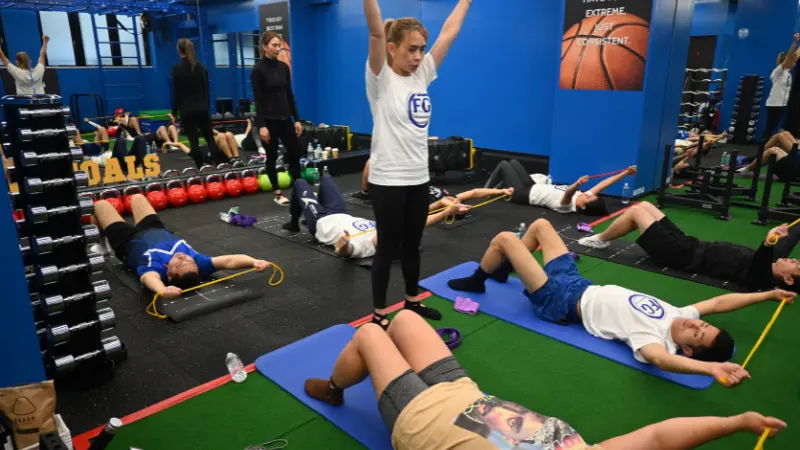
Why not start with "FREELETICS GOALS Gym Pilates Class"?
Thank you for reading to the end!
※The HYROX tournament information on this site was independently investigated and organized. Please be sure to check the official website for accurate information.